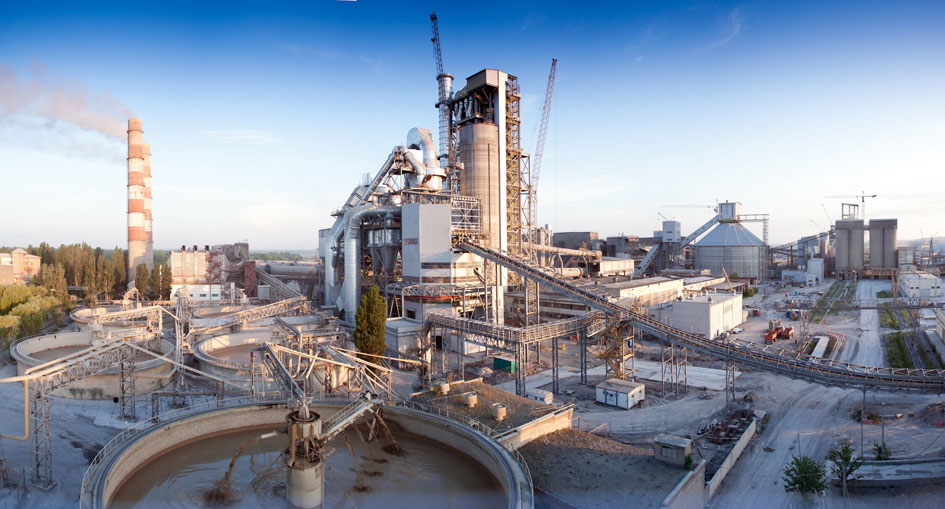
The Road Runs Through Carbon Capture Powered by Integrated Electrification, Automation and Digital Systems By Devan Pillay Cement is one of the hardest industries in the world to decarbonize, accounting for nearly 8% of global CO₂ emissions. Around 60% of these emissions come from the calcination of limestone itself, rather than from burning fuel. Efficiency, alternative fuels and electrification can…
Read MoreMonth: October 2026
St. Marys Outlines McInnis Mill Petcoke To Biomass Fuel Migration Plan
A proposed project for the St. Marys Ciment McInnis operation in eastern Quebec envisions gradual replacement of a portion of the petroleum coke currently used for kiln combustion with low-carbon alternative fuels, including forest biomass. The objective is to achieve an estimated 20% thermal substitution rate by 2030 and up to 70% longer term. St. Marys proposes installation of new…
Read MoreNew Cementitious Materials PCR Advances Environmental Reporting
The American Cement Association (ACA) has partnered with the Slag Cement Association, the Natural Pozzolan Association and the American Coal Ash Association, to develop new, consolidated Product Category Rules (PCR) for cementitious materials. Officially known as SMART EPD, Part B Product Category Rules for Cementitious Materials, Standard 1000-017, version 1, this effort entailed merging three different PCRs — for cement,…
Read MoreACA President Urges Senate to Pass Bipartisan Permitting Reforms
American Cement Association (ACA) President and CEO Diane Tomb issued the following statement on the Bipartisan American Affordability and Jobs Act of 2026 (S. 5653), introduced by Sens Shelley Moore Capito (R-W.Va.), Mike Lee (R-Utah), Sheldon Whitehouse (D-R.I.) and Martin Heinrich (D-N.M.): “Nothing gets built in America without cement, and too little gets built on time because the federal permitting…
Read MoreVycarb Proves Ocean-Bound Water Flows’ Carbon Capture, Storage Potential
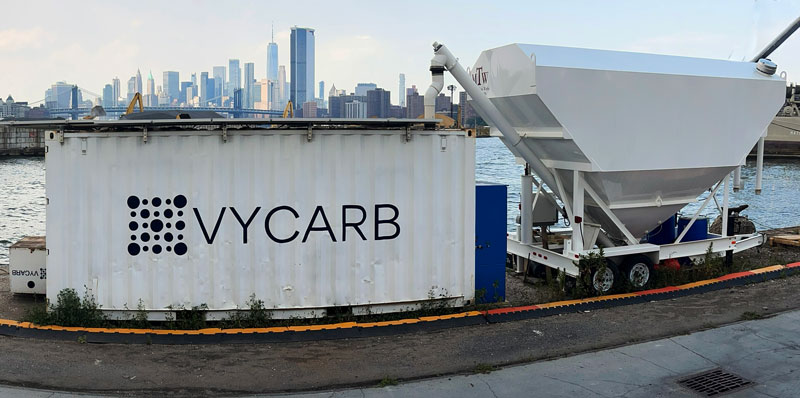
A Brooklyn, N.Y.-based startup is conferring with cement producers on prospective demonstration of a process capturing and storing carbon dioxide from plant emissions. Vycarb has pioneered a novel approach to permanently sequester CO₂ from industrial source points in proximity to rivers or water flows reaching ocean outfalls. A reactor at the heart of the Vycarb process uses naturally occurring calcium-…
Read More