By Mauro Nogarin
Brazil continues to be the country that invests the most in the expansion and modernization of its cement plants in Latin America.
While Venezuela seeks to increase cement production after years of stagnation due to limited investment in the country’s cement plants, Colombia announced a new investment that includes the modernization and replacement of entire equipment, bringing it up to international standards in the production process.
In Paraguay, the construction market continues to grow, and the state-owned company Industria Nacional de Cemento (INC) announced a project to modernize its main plant.
Finally, Mexico’s GCC confirmed new investments in its Odessa, Texas, plant to strengthen both its production capacity and its logistics system in order to efficiently meet the demand of a very promising market.
Brazil
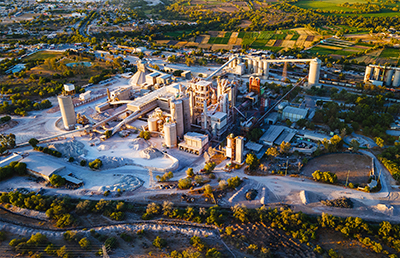
The transportation of a new ball mill from the port of Santos to the unit involved a special logistical operation with a train more than 120 meters long. The new 200-ton mill arrived to complete a new stage in Votorantim’s expansion project, which will double the cement production capacity of the Edealina factory to 2 million tpy. The installation of the new ball mill, a key part of the new grinding line, is part of the expansion project.
However, in addition to the mill, other equipment is being installed that is part of the new grinding area of the factory, which arrived on the same ship and was transported in more than 90 trucks through a complicated logistical operation. Currently, work is progressing toward the next stages of installing the equipment in the factory.
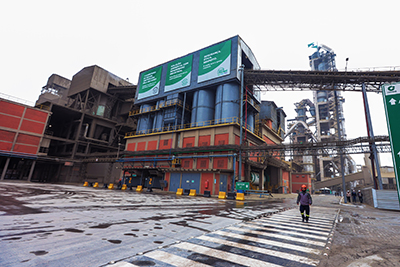
The expansion of the plant, located in the city of Edealina, in the department of Goiás (Central Brazil), which was initially announced at the end of the first half of 2024, will add an additional million tons to the current cement production capacity.
The project, which represents an investment of $40 million, consists of the construction of a new grinding line at the unit, doubling its current production capacity to reach a total of 2 million tons of cement per year.
The expansion of the Edealina plant is part of a comprehensive investment program of $900 million scheduled for the period 2024-2028, with the aim of strengthening growth and competitiveness in the Brazilian market.
Construction of the new grinding line began in the first half of 2025 and is expected to be completed in the fourth quarter of 2026. The project incorporates the most modern concepts of mining efficiency, energy efficiency and industrial automation.
The factory in Edealina produces Tocantins brand cement, supplying the entire state of Goiás and part of Mato Grosso.
The second important investment in Brazil’s cement factories is the Itambé company, a company focused on the growth of the civil construction sector and has invested $80 million for the incorporation of a new oven in its factory, located in the city of Balsa Nova, in the Metropolitan Region of Curitiba (South Brazil).
The newly inaugurated equipment was the result of two years of construction and generated five thousand direct jobs. After coming into operation, the new kiln increases the factory’s production capacity by 600,000 tons of cement per year.
This expansion will increase the clinker production capacity, and in turn increase the total cement production capacity, reaching 3 million tpy.
So far, the peripheral equipment necessary for the operation of the new furnace has been installed at the Cimento Itambé plant and thus achieved a record of thermal replacement in America, with reduced fuel consumption to international standards.
With the injection of alternative fuels, the furnace will be able to reduce fossil fuel consumption by up to 65%.
One of the main components of the project is the new furnace that was designed to operate by replacing fossil fuels with alternative and renewable sources, such as biomass and industrial waste. This measure contributes directly to the reduction of CO₂ emissions and the increase in the plant’s energy efficiency.
According to company data, through the co-processing of industrial waste, Itambé allocated approximately 168,000 tons of waste per year, from landfills.
The entire plant will also operate with a complete level of automation in all the various phases of the production process, which guarantees greater quality control, operational security and energy efficiency, consolidating the position of the Itambé company as one of the main cement suppliers in the southern region of Brazil.
Colombia
Cementos Argos approved a $50 million capital investment by 2026 in Colombia, with the goal of modernizing and strengthening its operations in the production of cement, concrete, and aggregates.
Most of these resources are earmarked for increasing the operational and productive efficiency of its assets, as well as implementing artificial intelligence solutions.
The investment will focus on strengthening its plants in accordance with market conditions.
The approval of this new capital expenditure (Capex) package aims to consolidate local operations with the implementation of new technological equipment that will help optimize operating costs.
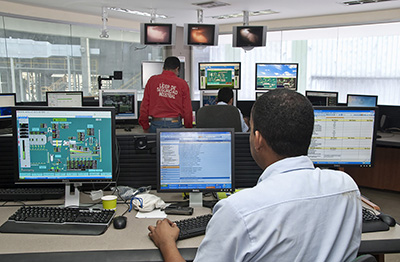
A central component will be the incorporation of artificial intelligence solutions, designed to optimize operational processes, accelerate fuel efficiency and maximize productivity throughout the value chain.
The technological implementation will encompass everything from initial production stages to logistics and commercial processes, in a comprehensive framework that connects the different phases of the business.
Among the most noteworthy elements are the development of digital systems with the integration of generative artificial intelligence platforms and advanced analytics to optimize the operation and control of the production process, as well as reduce fuel consumption in furnaces and improve energy efficiency.
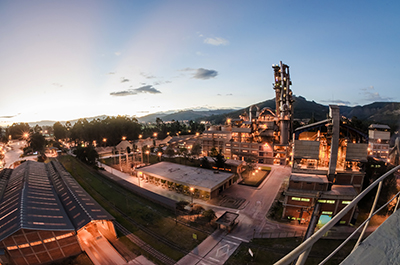
The investment is focused on modernizing cement grinding equipment, material handling systems, and kiln combustion, as well as installing sensors and monitoring systems for critical process variables.
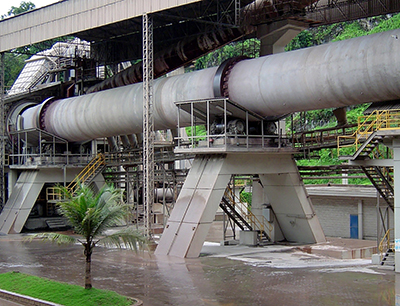
In addition, the modernization and replacement of entire pieces of equipment are planned, such as the limestone reclaimer in Cartagena and the filter in one of the kilns in Rioclaro.
These interventions aim to increase operational reliability while simultaneously enabling increased productivity and reductions in heat consumption at these two plants.
The implementation of generative artificial intelligence will also be integrated for closed-loop control of the operating variables of the kilns in Cartagena, Rioclaro and Sogamoso.
Mexico
Grupo Cementos de Chihuahua (GCC) announced it will allocate a significant investment in 2026 to its project in Odessa, Texas, to support its expansion in the U.S. market.
The Mexican cement company’s chief financial officer stated that more than 50% of this investment will be focused on completing and consolidating the new production line at the Odessa plant, as well as strengthening the logistics infrastructure.
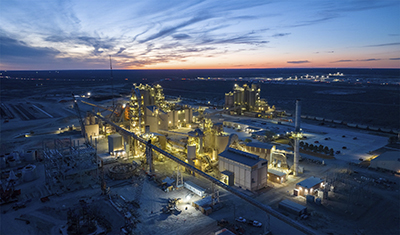
From an operational standpoint, this means expanding the transportation infrastructure, both rail and road, and consolidating the new terminals and other distribution points.
The company will also strengthen its network to distribute the additional volume to small and medium-sized markets, including some urban centers in Texas.
The remaining portion will be allocated to projects related to alternative fuels, energy efficiency, and expanding the aggregates business. GCC management anticipated that 2026 would be a crucial year due to the commissioning of the new line in Odessa, with production expected to ramp up in the third quarter.
The new line will operate at full capacity to optimize variable costs. This will involve replacing less efficient production in Odessa and reducing shipments from the Samalayuca plant in Mexico to lower transportation costs and improve competitiveness.
Paraguay
This year, the state-owned company Industria Nacional de Cemento (INC), aiming to reach a production of 575,000 tons of clinker and 600,000 tons of cement, announced a project to modernize its Villeta cement plant. This represents an increase of 43,000 tons compared to 2024 and 195,000 tons compared to previous years.
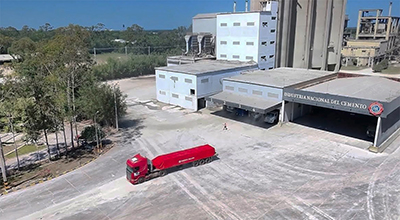
In 2025, the company closed the year with a production of 11,400,000 bags of cement, a figure approaching its installed capacity, which positioned INC with approximately 30% market share in the country.
Among the projects planned for 2026 is the overhaul of one of the two grinding units, specifically the cement mill separator, which will improve performance and increase production, with the aim of expanding installed capacity.
It is estimated that by 2026, production could reach an additional 1.5 million bags, thus achieving a total production capacity of 14 million bags per year.
Venezuela
The Minister of Industry and National Commerce visited the Yaracuy cement plant, located in the northern part of the country. The plant is currently undergoing the crushing and grinding process, followed by kiln firing, grinding, and bagging of the final product. It is projected to have a capacity of 600 tons of cement per day, equivalent to 14,200 bags of 42.5 kg per day.
This important project is part of the national economic agenda.
The Yaracuy plant, located in the municipality of Peña, is built on more than 300 hectares encompassing the mining and industrial complex. It is designed with technology comprising seven operational areas for the production of Type I portland cement. The estimated annual production is 4.5 million bags of cement, which corresponds to approximately 210,000 to 220,000 tons of cement per year.
The plant is an integrated mini-cement facility, and the main equipment for the process – limestone and clay crushing, raw material storage and preparation – includes two vertical shaft kilns approximately 35 meters high. The plant’s engineering and construction were carried out by Megatech International (India), and it incorporates environmentally friendly technology and reduces emissions during the production process.
Mauro Nogarin is Cement Optimized’s Latin American correspondent.