Industrial operations specialist Leonard has unveiled a refreshed corporate identity designed to signal more than a change of name, but a renewed commitment to removing more people from high-risk shutdown environments in the cement, metal, waste-to-energy and petrochemical industries.
The transition from G. Leonard to Leonard marks the beginning of a new strategic growth period for the Cookstown, Northern Ireland-headquartered business as it leads the way in safety, innovation, and productivity gains for some of world’s biggest industrial operations throughout the U.K, and Ireland, Europe, APAC and North America for clients including Amrize, CRH, Holcim, Breedon, Heidelberg Materials, Mannok, Titan America and more.
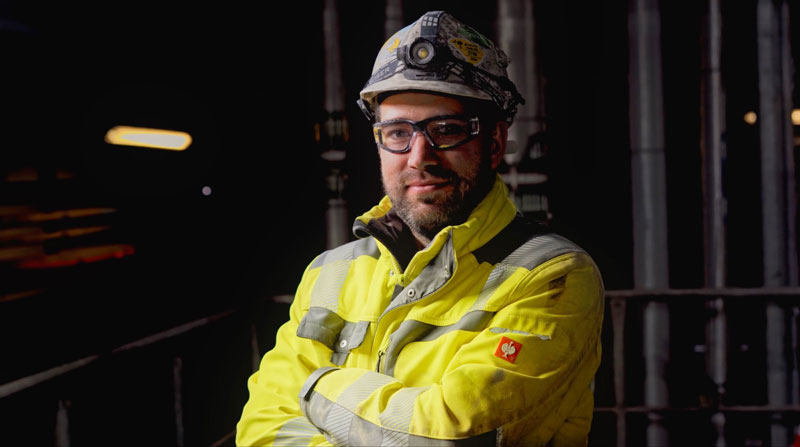
Over the next five years, Leonard has earmarked a significant investment in a new Northern Ireland headquarters and manufacturing facility to support its R&D ambitions and a larger operational presence in North America.
The rebrand also coincides with Leonard’s newest product development launch, the first-of-their-kind range of Descender robotic demolition and installation arms, which will be officially revealed in the coming weeks, and an on-going partnership with Ulster University and Innovate UK Business Connect to develop semi-autonomous capabilities with increased data capture across its product suite.
While cement remains a core market, Leonard sees strong growth potential in adjacent heavy industries where refractory-lined, high-temperature and confined-space assets are common and operators face similar safety and downtime pressures, including metal, petrochemical, biomass and waste-to-energy facilities, as well as paper, pulp and glass operations.
“Safety is the main driver of this change,” explained Managing Director Mark Leonard. “Our history is rooted in the cement industry, where high temperature kilns, pre-heater towers and other refractory-lined assets demand specialist expertise and critical maintenance during plant shutdown windows.”
Traditional methods of removing refractory can require teams to enter either unstable, confined, or cooling structures — in some instances environments presenting all three of these scenarios — during shutdown periods.
“For over 30 years, we’ve built our reputation in this space as we work to improve the safety of what is an essential and unavoidable process, but one that carries the highest risk of injury and human life. Our ultimate goal is to remove people from vessels and we’ve invested heavily in research and development that can make this a reality not only in the cement industry but across other industrial applications too,” Leonard said.
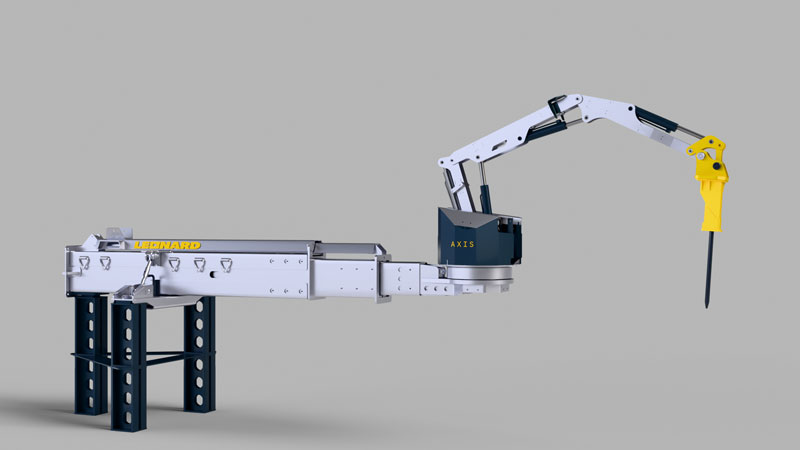
“Our refractory and demolition solutions have proven that massive productivity gains can be achieved while also greatly improving safety and efficiency of the critical path during shutdown periods. We’re helping shorten those timeframes while also keeping more people out of harm’s way, so we see massive growth potential and high demand for our technology which is fueling our expansion at home and in international markets,” he concluded.
For more information about Leonard and its range of robotic arms for the cement, metal, waste-to-energy and petrochemical industries, visit www.leonardglobal.com.