
In tandem with global cement industry clinker processing, steel producers are documenting net or equivalent carbon dioxide (CO2, CO2e) emissions reduction in their milling of bar, plate, rail and sheet output for construction and other markets.
U.S.-based Arkansas Steel Associates, Nucor Corp. and Steel Dynamics Inc., along with six European peers cite 32.5 million tons of CO2e emissions avoidance or reduction over the 2023-2025 window. Their figures abide Steel Climate Standard reporting methodologies and are certified by the Global Steel Climate Council in Washington, D.C.
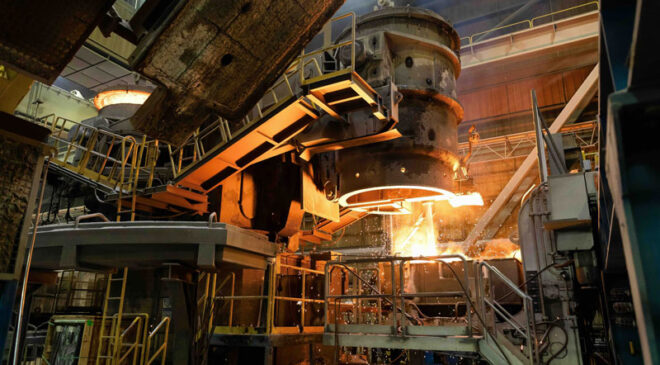
Carbon dioxide equivalent emission levels in electric arc furnace steelmaking – shown here in a Nucor plant – are typically one-quarter those tied to traditional blast furnace operations.
“More than 32.5 million tons of avoided emissions are evidence that measurable progress is happening today,” said GSCC Executive Director Adina Renee Adler. “What is equally important is how our members are achieving it. They are not following a single prescribed technology pathway. They are making investments and operational decisions appropriate for their facilities while being held to the same rigorous requirements for emissions measurement, verification and long-term reductions.
“Technology neutrality does not lower the bar for decarbonization,” she continued. “It sets the bar based on emissions performance. As carbon intensity increasingly influences trade, procurement and investment decisions, the ability to demonstrate real reductions through transparent, independently verified data will only become more important.”
GSCC released the Steel Climate Standard in 2023, providing a process-agnostic accounting mechanism for CO2 or CO2e emissions intensity per ton of material from electric arc furnace (EAF) and blast furnace (BF) operations the world over.
Arkansas Steel, Nucor and Steel Dynamics run EAF equipment, where the primary feedstock, ferrous scrap, is melted at temperatures well exceeding those of cement kilns. EAF equipment suits many grades of steel, especially bar and plate used in concrete reinforcement and structural shapes.