By Mauro Nogarin
The Latin American cement industry continues to invest in modernizing and expanding its plants, both to stabilize production and to meet CO2 reduction targets.
In Brazil, thanks to economic stability and a strong construction market, Votorantim is looking to increase cement supply in the northern part of the country. In Mexico, the global company Holcim is implementing a new and innovative system for burning sugarcane bagasse waste at its Tecomán plant to prevent the emission of approximately 55,000 tons of CO2 per year.
Finally, the Peruvian company Unacem is modernizing its primary crushing and grinding equipment at its Atocongo and Condorcocha plants to optimize the cement production process.
Brazil
The Brazilian company Votorantim announced the expansion of its cement plant with the goal of increasing production capacity at its Tocantins plant by 50%, reaching 1.5 million tons of cement per year. With a $50 million investment in the expansion of the cement plant located in the municipality of Xambioá, in the state of Tocantins, they will add another 500,000 tons to the plant’s current annual cement production capacity.
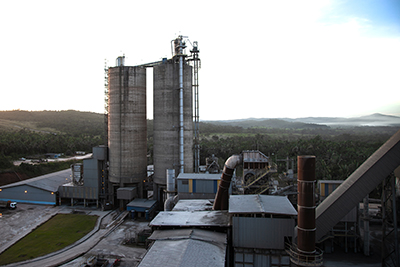
The project involves the construction of a new grinding line at the Tocantins plant, which will increase their production capacity to a total of 1.5 million tons of cement per year starting in July 2028.
The expansion of the Xambioá plant is part of a comprehensive $1 billion investment program between 2024 and 2028, focused on the growth and structural competitiveness of their operations in Brazil.
This program, of which $600 million has been invested to date, including the investment in Xambioá, covers operations in all regions of the country, with structural investments to increase cement production capacity, competitiveness, use of alternative fuels, and reduce CO₂ emissions.
The project to increase the production capacity of the Xambioá plant will proceed in conjunction with the modernization of the clinker production kiln and the technological development of cement with lower CO₂ emissions.
However, the company has announced it is also advancing studies to double clinker production at the plant, planned for 2030, and to expand the production of agricultural lime marketed under the Viter brand, the line of agricultural solutions.
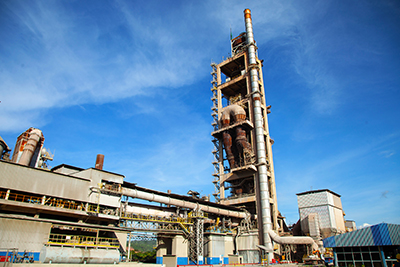
“Our Xambioá plant is already a benchmark for customers and the market in the North region of the country,” stated Global CEO Osvaldo Ayres Filho. “The investment in the expansion of this plant strengthens our competitive position and reflects our confidence in the growth potential of the states in the region. We seek to evolve together, driving regional development, revenue generation, and improving the level of service to our customers.”
Inaugurated in 2009, the Xambioá plant currently generates around 230 direct jobs, and the cement line produces the Poty and Tocantins brands, which supply the states of Tocantins, Pará and Maranhão, located in the northern part of the country.
The Xambioá plant uses a modern co-processing system, a technology that allows the use of different types of waste as fuel. In fact, at the Tocantins plant, 60% of the fuel used in the cement production unit currently comes from waste and biomass, replacing petroleum coke and reducing CO₂ emissions.
Mexico
As part of its commitment to accelerating the transition to low-carbon construction, the cement company Holcim Mexico announced a new investment to implement infrastructure at its Tecomán, Colima plant, developed by Geocycle, a company specializing in sustainable waste-management solutions.
The new plant will be able to process approximately 45,000 tons of biomass annually from the sugar industry, transforming it into a valuable resource for cement manufacturing.
This project focuses on valorizing sugarcane bagasse, whose moisture content, exceeding 50%, hinders its recycling process. To overcome this challenge, Geocycle designed a system that uses hot air recovered from the cement kilns themselves to dry up to 220 tons of biomass daily, reducing its moisture to 10% and grinding it to 95% for subsequent co-processing.
With this project, Holcim transforms an agro-industrial waste product into a resource for producing cement with a lower carbon footprint, accelerating the circular economy and demonstrating that decarbonization is also an opportunity to drive more sustainable development.
With this operation, Holcim Mexico will prevent the emission of approximately 55,000 tons of CO2 per year, equivalent to the annual electricity consumption of nearly 11,500 homes. This will reduce the consumption of non-renewable natural resources and neutralize the environmental risks associated with this waste, ensuring a clean input on an industrial scale.
The implementation of this project reaffirms Holcim Mexico’s vision of leading the decarbonization of the construction industry through innovation and cross-sector collaboration, solidifying Geocycle as its strategic arm for accelerating the circular economy in the country.
Peru
The Peruvian company Unacem is currently investing in the modernization of its Atocongo plant, including a new primary crusher, cement mill 1, and a sulfur dioxide emission reduction system for kilns 1 and 2. Additionally, they are continuing construction of the roofing infrastructure for the clinker storage facilities outside the Atocongo and Condorcocha plants, as well as the dust removal system for the kiln 3 cooler at the Condorcocha plant.
The new primary crusher will improve the first stage of processing the limestone from the quarry. Its main function is to reduce the size of the rock before the subsequent stages of crushing, transport and raw material preparation.
The main objective of this project is to optimize the cement production process and improve the handling of raw materials and clinker. UNACEM is also installing new conveyor belt systems to improve the internal movement of materials and reduce the environmental impact associated with conventional transportation.
The project includes the construction of the building that will house the new crusher, the pre-homogenization system, a truck unloading hopper, and the supports for the approximately 300-meter-long conveyor belt.
The sulfur dioxide (SO2) reduction system is designed to treat the combustion gases generated in kilns 1 and 2. This project began in late 2025 when UNACEM started upgrading kiln 1; however, thanks to the results obtained, the company decided to implement the same system in kiln 2 as well.
Mauro Nogarin is Cement Optimized’s Latin American correspondent.