By Mauro Nogarin
Colombia and Peru reported positive results in cement production during the first two months of 2026, a trend reflecting continued government investment in public works. The situation was different in Brazil, where, despite the government’s social housing program, cement consumption fell by 5.1% during the same period.
In Mexico, which is one of the host countries for the 2026 World Cup, public investment in sports and road infrastructure related to this major international event was quite moderate.
Argentina
The National Institute of Statistics (INDEC) reports that the construction industry began the year with weak activity. In January, the sector stagnated, showing no change compared to the previous month. However, year-on-year growth reached 1.2%.
In February, cement shipments again showed signs of weakness, reaching just over 700,000 tons, marking a further decline in activity in the construction sector. This figure represents an 11.6% drop compared to the previous month and also a year-on-year decrease of 5.8%.
In short, both January and February are very close to the levels recorded during 2024, a year considered one of the worst of the last decade.
In fact, the Portland Cement Producers Association (AFCP) stated that accumulated production for the first two months of 2026 was 1,431,000 tons, and for 2024 it was 1,420,000 tons.
Bolivia
The cement industry in Bolivia faces a complex scenario in 2026, characterized by high production capacity but high operating costs, fuel (diesel) and dollar shortages, leading to a 50% increase in material costs compared to the previous year, and limited dynamism in the construction sector.
According to the National Institute of Statistics (INE), accumulated production for the first two months of 2025 was 651,000 tons and 630,000 tons in 2026, registering a 3.3% reduction.
Brazil
The National Union of the Cement Industry (SNIC) stated that cement sales in February 2026 totaled 4.9 million tons, registering a 5.1% drop compared to the same month in 2025. However, in the first two months of 2026, the sector showed a 1.9% contraction compared to the previous year.
The negative result at the end of the month is mainly due to reduced activity in this industry caused by heavy rains, especially in the Southeast and Central-West regions of the country. On the other hand, the North and Northeast regions maintained a solid performance.
However, demand remains strong, as data indicates that, despite the weather-related challenges, cement consumption surpassed the previous year’s performance, thanks to the strength of the real estate market, where sales and new construction projects reached record figures of 5.4% and 10.6% in 2025, respectively.
This result was made possible by the social housing program “Minha Casa, Minha Vida” (My Home, My Life), which currently represents 52% of the national market.
Nevertheless, the international macroeconomic situation related to the conflict in the Middle East is impacting oil prices and influencing the exchange rate and the cost of coke, the essential input for cement production in the country.
Colombia
In February 2026, national cement production reached 1,080,000 tons, representing a 1.3% increase compared to the same month in 2025. During the month under review, 1,025,000 tons of cement were shipped to the domestic market, reflecting a 4.4% increase compared to February 2025.
In the January-February 2026 period, cement production reached 2,100,000 tons, showing a 2.2% increase compared to the same period of the previous year.
Shipments to the domestic market totaled 1,970,000 tons, resulting in a 5.6% increase compared to the January-February 2025 period.
In February 2026, compared to the same month in 2025, the increase in cement shipments was primarily due to growth in retail sales (7%).
In the second month of 2026, the growth in cement shipments to concrete plants (5%), and the increase in bagged cement reached 6.8%.
Ecuador
The Central Bank of Ecuador reported that cement production in February contracted by 16.4%, compared to the 418,000 tons produced the previous month, while shipments decreased by 13%, indicating lower demand for the product. Inventories also fell by 5.3%.
The persistent heavy rains in both the coastal and highland regions often temporarily halt construction projects and disrupt the logistics of transporting materials.
In February 2026, total cement shipments registered a monthly decrease of 13.1%. This result is explained by the contraction in both bulk cement (-9.6%) and bagged cement (-14.1%), which contributed -2.2 and -11 percentage points, respectively, to the overall change.
Within total shipments, declines were observed in the following segments: Bulk cement: government (-68.5%), other (-22.4%), and construction companies (-19.1%). Bagged cement: concrete mixers (-36.7%), construction companies (-22.3%) and retail (-14.6%).
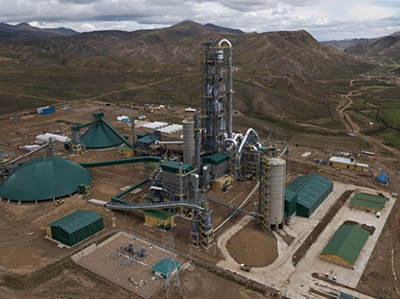
Mexico
While the Mexican construction sector showed some signs of recovery during the first half of 2025, public investment and civil works are currently experiencing a period of contraction. Private construction has maintained sustained growth, supported by a rebound in bank lending.
According to data from the National Cement Chamber (Canacem), the industry forecasts a production of 42 million tons for 2026, a volume similar to that recorded the previous year, with 63% of the demand for this volume generated by the private sector.
The construction of private projects and federal programs, such as “Housing for Well-being,” accounts for 34% of consumption, while self-construction represents 29%. Public works investment for the 2026 World Cup increased slightly thanks to expansion projects, facility renovations and improvements to public transportation in areas near the stadiums, distributed across the cities of Jalisco, Mexico City and Nuevo León, but which together did not exceed $90 million.
Regarding cement production, the new report from the National Institute of Statistics and Geography (INEGI) indicates a slight increase, rising from 6,330,000 tons in November and December 2024 to 6,790,000 tons in the last two months of 2025, registering a 7% increase.
Peru
The National Institute of Statistics (INEI) reported a strong rebound in the national construction industry during the first two months of 2026, with 15.6% growth in January, driven by public works projects. The government projects solid annual growth of 6.8% for 2026, consolidating the recovery after years of slowdown, although there are some political risks related to public administration due to the presidential elections to be held on April 12.
According to the report from the Association of Cement Producers (ASOCEM), national shipments reached 1,050,000 tons, an 11% increase compared to February 2025 and a 9% increase year-to-date.
- Production reached 950,000 tons, an 8.7% increase compared to February 2025 and a 6% increase year-to-date.
- Clinker production reached 825,000 tons, a 9.7% increase compared to February 2025 and a 5.5% increase year-to-date.
- Exports totaled 9,630,000 tons, a 13.4% decrease compared to February 2025 and a 1.6% increase year-to-date.
- Imports reached 70,000 tons, a 31% increase compared to February 2025 and a 54.6% increase year-to-date.
Cement imports arrived via the Port of Chancay from Vietnam (87%) and via the Tacna land terminal from Chile (13%).
Venezuela
The Guayana cement plant is located in the Matanzas industrial zone of Bolívar state and has been one of the most important industrial facilities in southern Venezuela for decades.
Its proximity to major industries such as Sidor, Venalum and Ferrominera in Orinoco state made this plant a key supplier of cement to the eastern and southern regions of the country, especially for infrastructure projects, civil construction, and works related to the mining sector. It also supplied specialized materials such as Class B, G, and H oilfield cement, necessary for well drilling.
However, in recent years, under the Chávez and Maduro administrations, investment in its maintenance was reduced.
Several technical reports indicated that production capacity had progressively declined over the past 20 years due to equipment deterioration, a lack of preventive and corrective maintenance, a shortage of spare parts, and recurring electrical problems. The plant was primarily designed as a cement grinding and dispatch facility, unlike other integrated cement plants in the country.
For this reason, just over four months after the change of government in Venezuela, the various technical and operational teams are working intensively to complete the repair and modernization of the Guayana cement plant, which is currently 85% complete.
This infrastructure aims to meet the increased demand for construction materials in that region of the country. Currently, two teams are working simultaneously to ensure the plant is operational according to the established schedule. The first team of technicians is focused on optimizing the grinding system, ensuring the fineness and quality of the processed clinker.
The second team is working on the maintenance of the bagging line, implementing measures to reduce packaging times and expedite shipments to distribution centers. The Guayana plant does not have kilns to produce clinker, but depends on the supply from other national plants, especially from Pertigalete, located in the neighboring state of Anzoátegui.
Despite this structural limitation, the Guayana plant possesses a set of industrial equipment that, for years, allowed it to maintain a capacity of between 350,000 and 400,000 metric tons of cement annually.
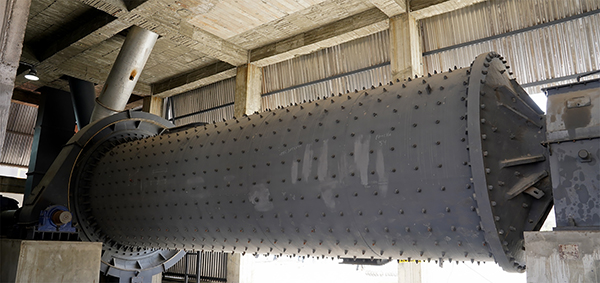
The core of the plant consists of its main Polysius ball mill, which crushes and pulverizes the clinker along with gypsum and other additives to obtain the final product. The mill has a nominal capacity of 66 tph and an annual capacity of approximately 570,000 tons of cement.
The plant also has a storage infrastructure comprised of three bag silos with a total capacity of 12,000 tons, three bulk cement silos with a total capacity of 15,000 tons, and one clinker silo with a capacity of 4,500 tons.
The grinding process is complemented by an automatic separator to classify the particles according to their size, ensuring the quality and uniformity of the cement. Material that does not meet the required particle size is returned to the mill, while the finished product continues to the next stages of the process.
Another key piece of equipment in the plant is the electrostatic precipitator, which captures fine dust particles generated during grinding and material transport. In addition to reducing pollutant emissions, this system allows for the recovery of material that can be reintroduced into the production process.
The internal material transport infrastructure utilizes three vertical bucket elevators to transport cement, clinker and other inputs between different production levels. Additionally, seven air slides operate – pneumatic systems that use air currents to efficiently move powdered material with low energy consumption.
The plant also features a Fuller pump system for the pneumatic transport of cement and other powdered materials using air pressure through the pipes, reducing losses and environmental contamination.
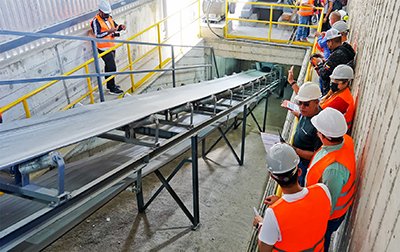
In the feeding and dosing area, three dosing pumps and two industrial feeders operate to precisely regulate the amount of clinker, gypsum and additives entering the mill. Throughout the facility, there is also a conveyor belt system that connects the different operational areas and facilitates the continuous movement of raw materials and finished products. This system is complemented by four industrial compressors, responsible for supplying compressed air for various pneumatic and automation processes.
The second cement plant, part of the state program to strengthen national industry, is located in the northern state of Yaracuy.
The Yaracuy cement plant is situated in the municipality of Peña, on an area of over 300 hectares encompassing a limestone quarry. This industrial activity is connected to a major transportation network.
The plant project was designed with an initial maximum production of 40,000 cu. meters (90,000 metric tons) for the first two years of operation, stabilizing at 60,000 cu. meters (140,000 metric tons) from the third year onward.
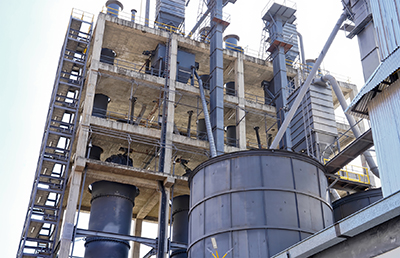
The plant is equipped with technology installed in seven operational areas for the production of 30 MPa portland cement.
The project will be a new source of production that will boost the local economy, generate jobs and enable the construction of important infrastructure projects. The plant was designed and equipped by the Indian company Megatech International and will have an approximate capacity of 14,200 42.5-kg bags per day, which translates to 600 tons of finished product per day.
The cement plant features a horizontal, dry-process rotary kiln that rests on rollers and is driven by an electromechanical system with a toothed ring and pinion. It incorporates an internal refractory lining and is designed to operate using petroleum coke as its primary fuel.
Its compact and modular design reduces installation and maintenance costs, offering an efficient solution for a mini cement plant geared towards supplying the regional market of Venezuela.
The ball mill at the Yaracuy plant, also built by Megatech International, is a partially charged horizontal rotary mill with steel balls that crush clinker, gypsum and additives into pulverized cement. Its compact design was adapted to the plant’s production capacity, in order to reduce maintenance costs based on its capacity.
Mauro Nogarin is Cement Optimized Latin American Correspodient