Specialized Equipment To Optimize The Maintenance Process.
By Jeff Mirisola
With advancements in kiln technology, size and applications, factories and facilities around the world are replacing outdated refractory installation techniques with more sustainable methods that use specialized equipment rather than backbreaking manual labor.
Throughout the process, these machines and tools help bring about safer and more productive maintenance. However, not all refractory maintenance equipment comes with industry-leading safety benefits. Consider these options to optimize safety during inspection and installation.
Safety Cages and Personnel Tunnels
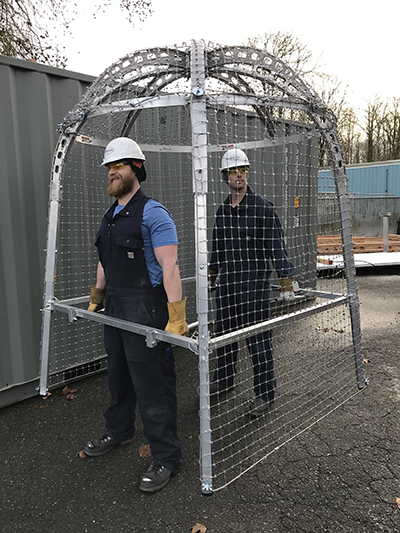
Starting with initial inspection, safety cages and personnel tunnels protect workers from falling debris. Not all regions allow workers to enter kilns before coating and clinker is removed, but in areas where this practice is used, facilities that employ cages and tunnels have been able to reduce injuries.
Like many pieces of refractory inspection equipment, cages and tunnels appear deceptively simple. However, careful material selection and design are key to optimizing safety.
Models manufactured with T6-6061 aircraft aluminum offer the best strength-to-weight ratio. The material is strong enough to protect workers from debris up to 140 kg (250 lb.) falling from a height of up to 2.44 meters (96 in.), but can be as much as 50% lighter than comparable steel models.
Additional safety features are also incorporated in safety cages from industry-leading manufacturers for even more protection. Crumple zones, for example, absorb the energy of a collapse, preventing serious injury or death. Stainless-steel netting protects workers from falling debris, as well.
To increase peace of mind, look to partner with manufacturers that perform a battery of destructive tests to ensure these features perform as intended in an emergency situation.
Kiln Access Ramps
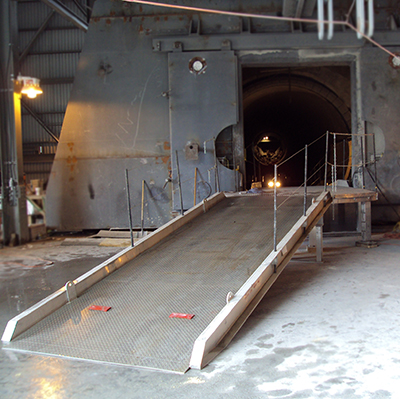
Custom-engineered kiln access ramps also provide a significant safety benefit for refractory maintenance applications. While a simple plank bridge might have sufficed in the past, today’s refractory installation relies on heavy equipment, such as skid steers and tear-out machines, to expedite the process. To get people and tools safely across the cooler, metal access ramps have become standard in facilities worldwide.
Keeping in mind that every burn floor, cooler and kiln is unique, partnering with a manufacturer that provides individualized products will help maximize safety benefits and efficiency for this vital installation component. Again, heavy-duty aluminum equipment provides durable, long-lasting results at half the weight of steel.
An access ramp manufactured with this material can support as much as 6,804 kg (15,000 lb.) live load. Custom-designed equipment can also incorporate features such as curbs and fall guards, when necessary, to protect workers as equipment moves across the ramp.
Conveyors
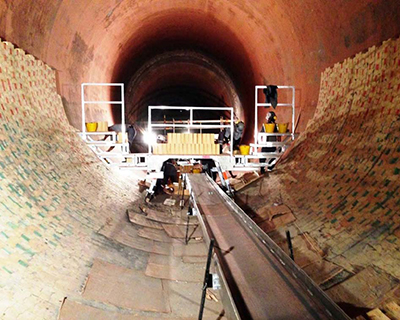
Incline and hydraulic conveyors are tools that refractory installers find increase employee safety and efficiency. Parts of the world with access to large labor pools might still find so-called “bucket brigades” a viable option for transferring refractory materials up kiln.
However, this method results in excess brick handling, which could damage refractory – not to mention a number of unnecessary sprains, strains and repetitive motion injuries. So, with safer options readily available, progressive facilities and contractors are embracing a more automated approach.
Using a conveyor, workers can easily move materials twice as fast as manual methods with significantly less physical strain. Additionally, refractory equipment specialists provide lightweight, modular equipment that is easily adapted to fit a specific kiln, including kiln diameter, burn floor length and terrain adjustments. With sections weighing just 16 to 19 kg (35 to 42 lb.), transportation and installation are easy for a small crew.
Bricking Machines
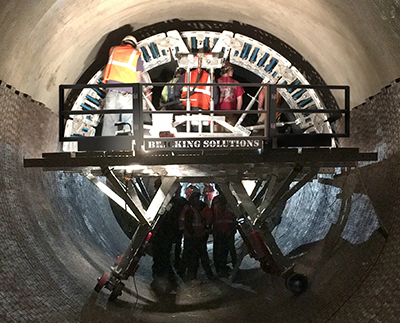
While support equipment has played a major role in increasing refractory installation safety, perhaps the most significant gains have been made in the bricking process itself. The widespread adoption of bricking machines in recent decades has revolutionized the speed and overall safety of installation applications.
Features and safety benefits vary among bricking machine models, but their overall contributions to installation efficiency are undeniable. Decades-old, first-generation machines can still reduce physical strain and safety risks compared to outdated installation methods – as long as they are well maintained.
Newer models provide the most innovative and cutting-edge technology, such as adjustable dual-arch systems with pneumatic cylinders to push bricks into place, greatly reducing the risk of injuries from unsupported overhead bricks. Machines featuring ergonomic design elements further increase worker comfort and safety.
For example, models from innovative manufacturers offer a cut-away section for unobstructed keying access to increase ease and visibility for closing out a ring. Additional safety features are also available from specialized manufacturers, including non-slip decks, dual braking systems and fall guards.
An experienced crew using a bricking machine can install 1 meter (3.3 ft.) of brick per hour, compared to roughly 0.6 meters (2 ft.) with other techniques. The end result is better refractory installation, which increases longevity and decreases downtime and repairs. The widespread use of bricking machines has also contributed to a significant decrease in refractory installation-related injuries and fatalities.
And Many More
From tear out to clean up, original equipment manufacturers offer a full range of support equipment to make refractory installation faster, safer and more efficient. Facilities that take advantage of these specialized tools can see significant savings through streamlined maintenance, minimized downtime and reduced jobsite injuries.
Jeff Mirisola is managing director of Bricking Solutions.