Deploying in situ Raman microspectroscopy to track initial 24-hour cement hydration, Massachusetts Institute of Technology and CarbonCure Technologies researchers have pinpointed the molecular sequence behind the early strength-enhancing effects carbon dioxide imparts in concrete or mortar mixes. Their findings reinforce a cement optimization, CO2 mineralization and finished concrete performance value proposition that CarbonCure Technologies and its producer partners in 20 countries have advanced since 2012. The CarbonCure partnership model entails installation of CO2 storage and injection assemblies at concrete batch plants, along with licensing fees applied per cubic yard of output.
During an investigation that commenced in early 2025 at the MIT Masic Lab, researchers determined that CO2, when injected into cement paste during mortar or concrete mixing, does not simply fill pore space with calcium carbonate particles – as previously theorized – but instead triggers a fundamentally different three-stage hydration sequence:
• Mineralization, within four hours of injection, during which CO₂ rapidly forms nanosized calcium carbonate particles, temporarily diverting calcium from its usual role and allowing a smooth, evenly distributed silica gel network to develop.
• Transition, four to eight hours after injection, where CO2 is consumed and normal hydration resumes as calcium hydroxide reacts with the silica gel network to form evenly distributed calcium–silicate–hydrate binder compound.
• Stabilization, occurring after eight hours, where hydration continues in a conventional manner, filling in the structure and producing a more uniform, interconnected binder that sets faster and achieves about 13 percent higher early strength when measured against reference pastes.
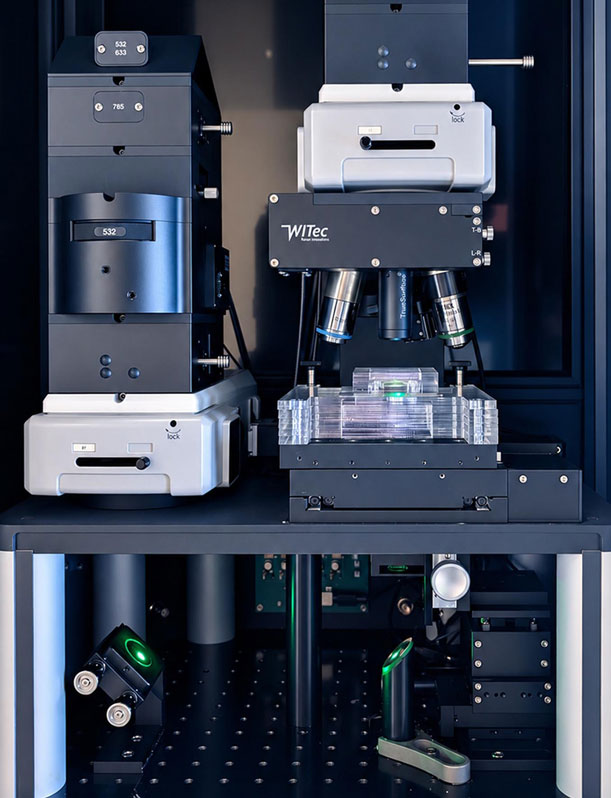
Researchers present their investigation methods and findings in “In Situ Raman Spectroscopy of a Silica Gel-Templated Hydration Pathway in CO2-Activated Cement,” published in the Journal of American Ceramic Society. Inverted Raman spectroscopy and a glass bottom sample stage assembly enabled them to measure the impact of CO2 on hydration in a cement paste with 1.0 w/c profile. Raman imaging revealed that C-S-H forms where silica gel meets portlandite versus on carbonate surfaces – the latter previously believed to serve as nucleation sites.
“The research findings provide the strongest experimental validation yet of carbon mineralization in concrete, explaining how carbon utilization technologies help producers reduce cement content and costs while delivering consistent, high-performing concrete,” said Yuliya Kravtsov, who was recently appointed CarbonCure CEO after executive tours with CRH, Holcim and Lafarge. “This science reaches far beyond a lab setting. It’s been commercially proven by our real-world application across more than 11 million [concrete mixer truck] loads in projects ranging from residential construction to complex high rise developments and infrastructure builds.”
“For years, researchers have observed that CO2-activated concrete is stronger at an early age, but the precise mechanism has remained elusive because the phases involved are transient and difficult to observe directly,” added MIT Department of Civil and Environmental Engineering Professor Admir Masic. “With in situ Raman microspectroscopy, we were able to watch the chemistry of carbon mineralization happen in real time. What we found is a highly ordered, beautifully orchestrated sequence: CO2 creates a silica gel scaffolding across the material, and that structure becomes the template for a more interconnected binder. These insights provide a new framework for improving concrete performance through CO₂ mineralization.”
“This study shows that mineralization does more than permanently store carbon dioxide in concrete,” concluded CarbonCure Chief Technology Officer Dean Forgeron. “It actively influences binder microstructure from the earliest moments of hydration. Industry can now leverage this chemistry to improve cement efficiency and profitability while delivering the same high-quality products and meeting even the most demanding project specifications.”